
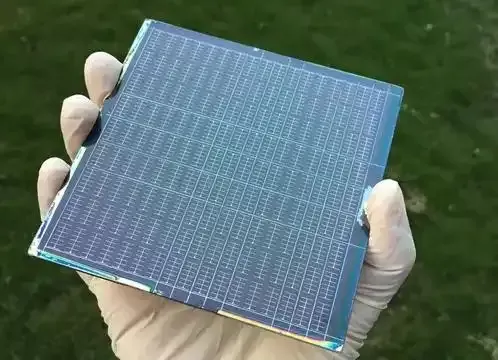
Amidst the accelerating global energy transition—coupled with the continuous advancement of deep-space exploration and space infrastructure construction—solar energy technology faces critical demands for low cost, long lifespan, lightweight design, and resource sustainability. Recently, my country celebrated a major breakthrough in the field of novel thin-film photovoltaics: a research team led by Meng Qingbo at the Institute of Physics, Chinese Academy of Sciences (CAS), successfully achieved a breakthrough in the performance of copper-zinc-tin-sulfur-selenium (CZTSSe) thin-film photovoltaic cells. They raised the cells' authoritative certified efficiency to 16.6% and successfully developed high-performance flexible cells and modules. This achievement not only signifies that my country has crossed a critical threshold toward the industrialization of this technology but also paves new pathways for large-scale energy applications on both Earth and in space.
The Unique Advantages of CZTSSe Materials and the Breakthroughs Overcoming Their Challenges
CZTSSe materials are composed of common, Earth-abundant, and environmentally friendly elements—specifically copper, zinc, tin, sulfur, and selenium. Possessing multiple distinct advantages—such as low resource costs and strong resistance to space radiation—they are regarded as one of the ideal candidates for constructing future all-thin-film tandem photovoltaic technologies. However, for nearly a decade, the development of this technology faced significant bottlenecks. Core scientific challenges—including complex internal defects within the material, atomic disorder, and substantial energy losses—severely constrained further improvements in cell performance, resulting in slow overall progress across the industry.
In this study, the Chinese research team undertook a systematic effort to tackle these fundamental challenges. They successfully resolved key scientific issues related to controlling material crystallization quality, optimizing atomic structures, and suppressing defect activity, thereby effectively reducing internal energy losses at the source. Since the team first broke through the 13% efficiency barrier in 2022, they have achieved a series of continuous, multi-step efficiency leaps—from 14% and 15% to the current 16.6%—all within a span of just three years. Concurrently, they successfully scaled up the device size and constructed flexible modules. This series of achievements powerfully demonstrates my country's robust capabilities in both the fundamental research and engineering application of novel photovoltaic materials.
Efficiency Breakthrough Lays the Foundation for Commercialization
According to the developmental trajectory of thin-film photovoltaic technology, once solar cell efficiency enters the 15% to 16% range, the fundamental prerequisites for gradual industrialization are established. Currently, CZTSSe cells have achieved a certified efficiency of 16.6%; when combined with their inherent advantages regarding resource availability and cost-effectiveness, this achievement has firmly laid the groundwork for advancing their industrialization. Looking ahead, as cell efficiency continues to approach the 20% mark—and as module efficiency reaches 18% while achieving stable, large-scale manufacturing—CZTSSe technology is poised for widespread application across a vast array of fields. These include aerospace equipment, low-Earth orbit satellite internet constellations, space-based energy hubs, and even terrestrial distributed energy systems. In doing so, it will contribute "Chinese wisdom" and "Chinese solutions" to the global energy sector's green transition.
Conclusion
This breakthrough by the Institute of Physics at the Chinese Academy of Sciences represents not only a milestone in my country's R&D of novel thin-film photovoltaic technologies but also a symbol of the advantageous position we now occupy in the fierce competition for cutting-edge technologies aimed at meeting future energy demands. As the industrialization process accelerates, CZTSSe cells are poised to emerge as a pivotal force in driving the green energy revolution and serving the nation's critical strategic imperatives.





One step to find us,we will respond within 24 hours.
More Contact Details
008613738639386
[email protected]